
February 9, 2026
AI in Supply Chain: How AI Is Rewiring Logistics in 2026
A shipment hits a typhoon, and the AI reroutes it, notifies the trucker, and restocks a backup supplier before anyone even notices. That's logistics in 2026. Here's how it works, what it costs, and what it actually returns.
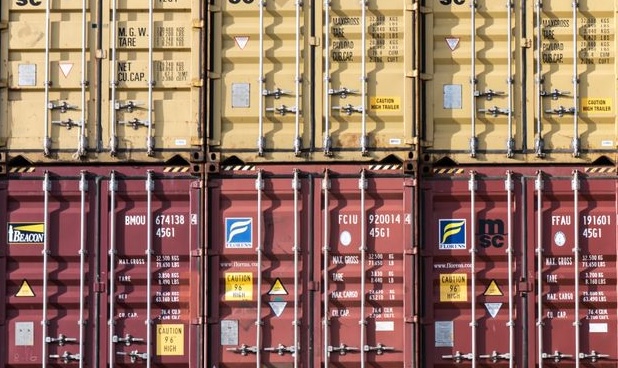
The Self-Healing Supply Chain: How AI Is Rewiring Logistics in 2026
AI in logistics uses machine learning, predictive analytics, natural language processing, computer vision, and robotics to make supply chains run smoother, everything from forecasting demand and planning routes to managing warehouses and handling returns. The market for it is expected to reach $549 billion by 2033, growing at a yearly rate of roughly 46.7%, and more than 65% of logistics companies have already put AI to work somewhere in their operations.
The question in 2026 isn't really whether to use AI in logistics anymore. It's how fast you can scale it once you've started.
Most companies have already moved past the experimentation stage. We're now in the era of agentic AI, where systems don't just recommend a move, they make it. Autonomous mobile robots run entire warehouses with the lights off, generative AI negotiates freight rates on the fly, and the whole industry has shifted from reacting to problems to seeing them coming and stopping them before they happen.
Picture a shipment leaving Shanghai that runs straight into a typhoon. An AI agent notices, reroutes the container, lets the local trucking partner know, updates the customer's delivery window, and orders backup stock from a regional supplier, all in roughly the time it took you to read this paragraph.
If your supply chain isn't doing anything like that yet, it's already behind. This guide walks through how AI is reshaping logistics in 2026, backed by current data, real use cases, and steps you can actually act on.
From tracking to thinking: how we got here
To understand where things stand in 2026, it helps to see how fast the underlying intelligence has changed. Logistics has gone through three distinct stages.
- Descriptive analytics, or "what happened." This was the era of basic GPS tracking and monthly reports. You'd find out a shipment was late only after it had already missed its window.
- Predictive analytics, or "what will happen." Machine learning started forecasting delays: an 80% chance a truck runs late because of traffic, say. Useful, but a person still had to decide what to do about it.
- Agentic and prescriptive AI, or "make it happen," which is where we are now. AI doesn't just predict a problem, it acts on it. Agents get the freedom to make decisions within limits the business sets. They don't just flag a risk, they deal with it. That's the shift from a supply chain run by managers to one that's AI native.
Where things stand: the numbers behind the shift
Before getting into the technology itself, the data is worth a look, because it shows just how fast companies are moving toward AI native supply chains.
- The global market for AI in logistics and supply chain is expected to hit $21.06 billion by 2029, growing at roughly 38.5% a year, driven by the need for speed and the growing complexity of global trade.
- Adoption has jumped fast. As of 2025, about 30% of businesses have fully built AI into their operations, up from just 6% in 2023. Companies that haven't caught up are finding it hard to compete on price or speed.
- Talent is a big driver too. Nine out of ten C-suite leaders plan to spend more on AI in 2026, largely to make up for staffing shortages. The goal isn't replacing people, it's giving the people you have the tools to do more.
What agentic AI actually means in logistics
Agentic AI is the phrase everyone's using in 2026, but what does it actually mean for someone running a logistics operation day to day?
Regular AI works a bit like a GPS. It tells you there's traffic ahead and suggests a different route, but you're still the one turning the wheel. Agentic AI works more like a self driving car. It notices the traffic, reroutes on its own, and lets the customer know, without anyone stepping in.
In a logistics setting, that means AI agents can:
- Negotiate on their own. An agent can scan spot market rates, negotiate pricing with carriers based on past data, and book the freight instantly.
- Self heal a supply chain. If an agent spots a raw material shortage at a factory in Vietnam, it can trigger an order from a backup supplier in Mexico so production doesn't stop.
- Handle compliance. Agents can check thousands of shipping documents in seconds, catching and fixing customs paperwork errors before goods ever reach the border.
What integrating AI actually gets you
In 2026's competitive climate, coordinating everything manually is a real disadvantage. Bringing AI into logistics operations does more than shave a few percentage points off costs here and there, it changes what your operation is actually capable of.
- Scaling without the chaos. Growth used to mean hiring more people and managing more mess. AI lets you handle ten times the order volume without a matching jump in administrative overhead.
- Fewer costly mistakes. Manual data entry and inventory counts cost the industry billions every year in errors. AI brings those error rates down close to zero, so the stock levels in your ERP actually match what's on the shelf.
- Real visibility, not guesswork. Instead of waiting on a status update call, everyone involved can see exactly where a shipment is, what condition it's in, and when it's expected to land.
- A better customer experience. With two hour delivery windows becoming the norm, AI is what makes the speed and transparency customers now expect actually possible, through proactive updates and personalized delivery windows.
Where AI is making the biggest difference in 2026
1. Predictive demand forecasting
Relying on last year's spreadsheet to guess this year's demand is a thing of the past. Modern AI uses what's sometimes called signal expansion, pulling in thousands of outside variables: weather patterns, a product going viral on social media, local events, economic shifts, to catch demand spikes before they hit.
Deep learning models, like LSTMs, comb through time series data to catch patterns a human analyst would likely miss. The payoff is real: inventory holding costs drop by 15 to 20%, and the dreaded stockout becomes far less common. One practical example: AI predicting a surge in umbrella sales in a region three days before a storm rolls in, and automatically restocking local fulfillment centers ahead of it.
2. Autonomous dark warehouses
Dark warehouses are facilities that run fully automated, with no need for lighting or climate control, which saves a huge amount on energy. Inside, AI driven mobile robots pick, pack, and sort goods around the clock.
Unlike the older robots that just followed magnetic tape on the floor, today's versions use LiDAR and simultaneous localization and mapping to move freely and avoid obstacles on their own. That bumps order processing speed up by 30 to 50% and takes human error out of picking almost entirely, which matters a lot for same day delivery models where speed is the whole game.
3. Smarter, greener routing
Routing in 2026 isn't just about getting there fast, it's about doing it sustainably. AI calculates routes that cut down fuel use and carbon output, which helps companies hit tighter environmental targets.
The routing engine factors in traffic, road elevation (hills burn more fuel), and how much weight the truck is carrying to find the most fuel efficient path. That can cut fuel costs by up to 20% and meaningfully lower emissions.
4. Generative AI for the paperwork
International shipping runs on paperwork. Generative AI, built on large language models, can draft contracts, commercial invoices, and HS code classifications almost instantly. A freight forwarder can upload a purchase order as a PDF, and the AI pulls the data, fills out customs forms, and even emails the broker, all within seconds. That cuts administrative time by around 60% and reduces the fines that come from incorrect customs filings.
5. Visual quality control
Cameras running computer vision on a conveyor belt can inspect packages at high speed, catching damaged boxes, missing labels, or wrong items with 99.9% accuracy, and flagging them before they ever get loaded onto a truck. That cuts return rates significantly, since damaged goods get caught before they leave the warehouse in the first place.
6. The autonomous carrier orchestrator
This one marks a real leap from passive tracking to active management. In a traditional setup, a logistics manager burns hours juggling emails, carrier portals, and phone calls. Agentic AI removes most of that friction.
- Unified access across carriers. The agent connects to hundreds of carrier systems at once, pulling live data on container availability, vessel schedules, and current pricing without anyone logging into a dozen different portals.
- Rate negotiation on its own. By reading historical lane data, seasonal patterns, and current spot market moves, the agent can run bid and ask exchanges with carrier systems, securing the best rate within a set budget and locking in the contract in seconds.
- Rerouting before things get worse. Rather than just alerting you to a problem, like a strike at a port, the agent works out the ripple effects across the whole shipment and finds an alternative, say routing through a different port or switching to rail, and books it before the bottleneck grows.
Digital twins: testing disasters before they happen
One of the more powerful ideas gaining ground in 2026 is the digital twin, a virtual replica of your entire physical supply chain that mirrors your warehouses, trucks, inventory, and suppliers inside a digital environment.
- Scenario planning. You can run what if scenarios: what happens if the Suez Canal gets blocked, or your main supplier goes under.
- Stress testing. The AI simulates these events and shows you exactly where the supply chain would break, so you can shore it up ahead of time.
- Ongoing optimization. The digital twin runs thousands of simulations a day looking for small inefficiencies, like a truck that's consistently running 10% empty, and suggests fixes.
This lets logistics leaders make their mistakes in simulation, not in the real world.
Solving the returns problem with AI
Returns quietly eat away at e-commerce profitability more than almost anything else. In 2026, AI is finally being pointed at reverse logistics directly.
- Grading returns automatically. When an item comes back, computer vision checks its condition, unopened, damaged, resellable, and routes it straight to resell, refurbish, or recycle.
- Spotting returns before they happen. By reading customer behavior, AI can flag frequent returners or catch sizing issues ("this shoe runs small") and warn a shopper before they buy, cutting down on the return in the first place.
- Smarter routing for returns. Instead of shipping every return back to one central hub, AI can send it to a nearby store that's low on that item, getting it back on a shelf within a day.
Why the investment makes sense now
Cost reduction and ROI
AI cuts down on wasted mileage and avoids expensive last minute spot market bookings. Early adopters of AI in their supply chains report roughly a 15% drop in logistics costs. In an industry running on thin margins, that 15% is often the line between profit and loss.
A better customer experience
Customers in 2026 expect Amazon level visibility. AI powered updates like "your package is delayed two hours because of weather in Chicago, but it'll still land by 5pm" build trust and cut down on the endless "where's my order" tickets support teams deal with.
Scaling without adding headcount
With labor still tight across the industry, AI lets companies handle peak seasons like Black Friday without a scramble to hire temporary staff. Agents don't get tired, don't need breaks, and can scale processing power up instantly.
What kind of return can you actually expect?
One of the first questions logistics leaders ask before signing off on an AI investment is simple: what's the realistic payback, and how soon. The answer depends on the use case, the scale of the rollout, and how efficient things already are, but industry benchmarks give a decent picture.
Use Case | Typical Cost | Annual Savings | Typical ROI | Payback Period |
|---|---|---|---|---|
Demand Forecasting | $80K to $250K | 20 to 30% lower inventory cost | 200 to 400% | 9 to 18 months |
Predictive Maintenance | $100K to $350K | 25 to 40% lower maintenance cost | 180 to 350% | 12 to 24 months |
Warehouse Automation | $200K to $1M | 20 to 30% lower labor cost | 120 to 250% | 18 to 36 months |
Visibility Platform | $60K to $180K | Fewer OTIF fines, lower safety stock | 200 to 500% | 6 to 12 month |
Disruption Management | $100K to $300K | Less risk, lower expediting costs | 150 to 350% | 12 to 18 months |
These are industry benchmarks, not guarantees, actual figures depend heavily on company size, existing infrastructure, and how broadly the system gets deployed.
What actually drives the return
- Labor savings. Automating repetitive work, inventory counts, route planning, order processing, cuts manual labor costs and frees people up for higher value work.
- Tighter inventory. Better forecasting means less capital tied up in excess stock. A business spending $10M a year on inventory that cuts safety stock by 20% frees up $2M in working capital.
- More efficient transport. A 14% cut in transport costs for a company spending $5M a year on logistics works out to $700K in direct annual savings.
- Fewer penalties. Better ETA accuracy from AI cuts down on OTIF penalties, which can eat up 2 to 5% of revenue in retail supply chains.
- More uptime. Predictive maintenance typically cuts unplanned downtime by 30 to 50%, and every hour of downtime avoided is worth real money.
Building the case internally
Before pitching an AI investment internally, it helps to have three numbers ready:
- The current cost of the problem: what late deliveries, overstock, downtime, or bad routing actually cost you today.
- A realistic improvement estimate, based on benchmarks from similar deployments.
- The full cost of implementation, including development, integration, training, and ongoing upkeep.
A reasonably conservative projection for most mid market logistics businesses investing in route optimization and demand forecasting shows full payback within 12 to 18 months, with 200 to 400% ROI over three years.
Custom builds vs off the shelf tools
SaaS logistics tools get you moving faster, but they come with licensing fees that climb as you grow and limited room to customize. A custom AI logistics platform built around your specific workflows gives you a few real advantages:
- No per user licensing that scales with headcount
- Full ownership of the platform as a business asset, not a recurring cost
- Automation aimed at your actual inefficiencies, not generic use cases
- The ability to update routing logic, forecasting models, or integrations right away, without waiting on a vendor's release schedule
Traditional logistics vs AI powered logistics
Capability | Traditional logistics | AI powered logistics |
|---|---|---|
Route planning | Manual, fixed, based on past rules | Dynamic and continuously optimized in real time |
Demand forecasting | Spreadsheets and historical averages | ML models reading 100+ data signals |
Inventory management | Periodic counts, manual reorder points | Continuous monitoring with auto replenishment |
Maintenance | Scheduled or reactive after a failure | Autonomous rerouting within minutes |
Visibility | Phone calls and email updates | Real time dashboards for everyone involved |
A five step roadmap to actually implementing this
Bringing AI in isn't just a software purchase, it means changing how your operation works day to day. Here's a practical path:
- Unify your data first. You can't build anything reliable on messy data. Start by breaking down silos, connect your warehouse management system, transportation management system, and ERP into one shared data source.
- Start with the easy wins. Don't try to build a dark warehouse on day one. Start with demand forecasting or a customer service chatbot, something with a fast payoff that proves the value to the rest of the business.
- Keep a human in the loop. Design the system so AI handles the routine 80% and flags the trickier 20% for a person to review. Train your team to oversee the AI rather than do the manual work themselves.
- Run small agentic pilots. Once you trust the data, try a limited pilot, like letting an agent book freight autonomously for shipments under $500.
- Simulate before you scale. Use digital twins to model what happens if you roll AI out across your whole network, before you actually flip the switch.
A proof of concept worth trying: zero touch ETA updates
A good way to show what agentic AI can actually do is to build a focused proof of concept around automated ETA synchronization, aimed at closing the information gap between the road and the back office.
- Constant monitoring. The agent gets access to live weather feeds, traffic data, and port telemetry.
- Real reasoning, not just alerts. The agent doesn't just register "rain," it works out how that rain actually affects a loaded truck's speed on a specific stretch of road.
- Updating systems without anyone touching them. Once a delay crosses a set threshold, say more than 30 minutes, the agent recalculates the new arrival time, logs into the ERP or TMS, updates the delivery record, and notifies the warehouse team and the customer automatically.
What you'd expect to see: manual data entry from dispatchers drops by up to 80%, the ERP reflects reality in real time instead of lagging behind, and proactive delay updates cut down sharply on the usual flood of "where's my order" messages.
What makes the agentic approach worth it
- It scales without extra effort. An agent can watch 10,000 shipments as easily as ten.
- It never sleeps. These agents work across time zones, handling a midnight port disruption while your team is asleep.
- It frees people up for bigger thinking. Once agents take over the day to day orchestration, your logistics team can shift from constantly putting out fires to actual long term strategy.
The real challenges of putting AI to work in logistics
1. Data quality and availability
AI is only as good as the data behind it. Logistics data is often scattered across ERP, TMS, WMS, and older systems, in inconsistent formats, with missing location data or records stuck in silos, all of which drags down accuracy.
The fix is investing in a data consolidation layer before rolling out AI. A custom logistics platform that pulls all your data sources together through APIs gives you the clean, unified dataset AI actually needs to work well.
2. Working around legacy systems
Most logistics companies are still running older ERP and TMS setups that were never built with AI in mind. Connecting new AI tools to that infrastructure without losing data or disrupting operations is a genuinely hard technical problem.
The fix is partnering with a team that has real experience bridging modern cloud tools with legacy infrastructure. This kind of integration work is exactly where Upverse's logistics team specializes.
3. Regulatory complexity
Logistics touches customs rules, import and export restrictions, transport safety regulations, and data privacy laws across multiple countries at once. AI systems need to be built to reflect and adapt to all of that.
The fix is building compliance logic directly into the AI platform: automated document checks, customs code matching, and real time regulatory alerts that lower the risk of getting it wrong.
4. Unpredictable disruptions
Geopolitical events, natural disasters, and sudden demand shifts can throw off AI models trained purely on historical data. A rigid system struggles badly when real conditions stop matching what it learned from.
The fix is deploying agentic AI built for real time adaptability, systems that keep pulling in live feeds (news, port status, weather) and recalculate on the fly instead of relying on a static model.
5. Change management and skills
Bringing AI in means logistics teams have to change how they work, trust what the algorithm recommends, and build new skills around reading and interpreting data. Resistance to that change is one of the most underrated obstacles to a successful rollout.
The fix is using simulation based training so teams can test AI decisions in realistic scenarios before going live, and starting with pilot projects that show quick, visible wins.
Best practices for putting AI to work in your operation
1. Know what you're actually trying to fix
Before picking any AI tool, get specific about the problem. Are you trying to fix inventory management, or route optimization? Knowing the exact pain points in your logistics operation, and how AI could actually address them, is what lets you tell whether AI is even the right answer for your situation.
2. Pick the right solution for your business
There's no shortage of AI tools on the market, and the list keeps growing, so choosing the right development partner matters. Weigh cost, scalability, accuracy, and how well it fits with your existing platforms.
3. Start small
Don't try to roll AI out across your entire operation at once. Run a small pilot first, see how it performs, and expand once you've got real results behind you.
4. Get stakeholders on board early
This is a real investment, so it's worth getting buy-in from leadership and from the employees and managers who'll actually be using these tools before you commit.
5. Train your people properly
AI is genuinely complex technology. Teaching your staff how to use it well is what determines whether you actually get the value out of it.
6. Measure what happened
Track the results of your rollout so you know what's actually improving. Use that data to fine tune your operations and justify the investment going forward.
Where AI shows up across the logistics industry
AI in logistics isn't one tool, it's a whole set of technologies spread across the supply chain. The ones making the biggest difference in 2026:
- Automated warehousing and robotic process automation. Modern warehouses now use collaborative robots working alongside people to pick and pack orders, with AI assigning the most efficient picking paths and cutting walking time by up to 50%.
- Intelligent route optimization. Beyond basic GPS, AI reads historical traffic, weather forecasts, and road conditions to plan routes that save fuel and time, and can reroute drivers mid trip if there's an accident up ahead.
- Predictive fleet maintenance. IoT sensors on trucks track engine health in real time, and AI uses that data to catch mechanical problems before they happen, scheduling maintenance during downtime instead of dealing with a breakdown on the highway.
- Demand prediction and inventory management. By reading purchasing trends and seasonality, AI helps logistics managers hit the sweet spot of inventory, enough to meet demand without tying up capital in unsold stock.
What to watch out for in 2026
- Data silos and quality. AI is only as reliable as what it's fed. If your inventory data is 80% accurate, your AI is going to make the wrong call 20% of the time.
- The talent gap. There aren't many people who understand both logistics operations and how to manage AI agents. Training your current team is often faster than trying to hire around the gap.
- Security. Connecting your physical supply chain to the internet opens it up to cyber risk. A compromised AI agent could, in theory, reroute a shipment straight to a thief. Cyber resilience strategies, including using blockchain for tamper proof records, matter a lot more in 2026 than they used to.
Choosing the right partner for this
Picking a development partner for AI logistics software is a serious decision. Worth looking for:
- Real logistics domain knowledge, not just general AI development experience
- Experience bridging legacy systems with modern cloud architecture
- A track record building custom TMS, WMS, and supply chain management platforms
- Security credentials like ISO 27001 or CMMI, which signal mature, tested processes
- Architecture that can handle 100 orders today and 100,000 tomorrow without a rebuild
- Real support after launch, since AI models need ongoing monitoring, retraining, and tuning
At Upverse, we build AI logistics software for global clients, combining deep domain knowledge in logistics with enterprise grade security practices. Whether you need route optimization, demand forecasting, warehouse automation, or a fully integrated AI supply chain platform, we build around your actual workflows instead of handing you a generic template.
Where this is all heading
The direction is pretty clear: full autonomy, where multi agent systems handle every layer of the supply chain at once, forecasting demand, running warehouse operations, managing carrier relationships, and responding to disruptions without anyone stepping in.
- Agentic AI: autonomous agents that reason, plan, and carry out full logistics workflows start to finish
- Generative AI for routing: increasingly outperforming classic operations research methods on complex, multi constraint routing problems
- Smarter road infrastructure: autonomous vehicles and connected infrastructure reshaping last mile delivery
- Real time network optimization: AI linking every node, suppliers, manufacturers, carriers, retailers, into one adaptive system
With the market on track to reach $549 billion by 2033, the companies investing in these capabilities now are the ones that will set the pace for the next decade.
Conclusion
Logistics in 2026 is faster, smarter, and considerably more autonomous than it was even a couple of years ago. Whether it's agentic AI negotiating rates, digital twins stress testing the supply chain, or computer vision catching quality issues before they leave the warehouse, technology has become the real competitive edge.
Companies that lean into this will see lower costs, happier customers, and a supply chain that can take a hit and keep moving. The ones that don't will spend a lot of time wondering where their shipments went.
If you're figuring out where AI actually fits into your logistics operation, Upverse can help you map the workflow, find the real bottlenecks, and build something that fits how your business actually runs, not a generic template.
Frequently asked questions
What's the difference between traditional AI and generative AI in logistics? Traditional AI deals mostly in predictions, like estimating when a truck will arrive. Generative AI creates new content and solutions, drafting a contract, negotiating a price with a vendor, or putting together a disaster recovery plan.
How does AI support green logistics? AI optimizes shipping routes to cut fuel use and make better use of truck capacity, meaning fewer vehicles on the road. It also helps pick more eco-friendly carriers, which directly lowers a company's carbon footprint.
Will AI replace logistics managers? No, but the role will shift. Managers will spend less time on manual scheduling and more time overseeing AI decisions and handling the complex exceptions that still need human judgment.
What is agentic AI in supply chain management? It's autonomous agents that can carry out tasks toward a goal without constant supervision, noticing a shipment running late, finding a new carrier, negotiating a price, and rebooking the freight, all on their own.
What kind of ROI can you expect from AI in logistics? It varies by use case, but reports suggest AI can cut operational costs by 15 to 20% and improve inventory management efficiency by around 35%.
Is AI in logistics secure? It depends on how it's built. In 2026, companies are increasingly relying on blockchain and stronger encryption to keep AI driven data tamper proof.
Can AI help with last mile delivery? Yes. AI plays a big role in the last mile, adjusting delivery routes in real time based on traffic and parking, and coordinating delivery windows with customers to cut down on failed attempts.
How expensive is it to implement AI in logistics? Costs have come down thanks to SaaS style platforms. Instead of building AI from scratch, a lot of companies now subscribe to AI native platforms, which makes the technology realistic even for mid sized firms.



Not sure where AI fits in your business?
Most companies know AI matters. Very few know exactly where to apply it to see a real return. Take the free AI readiness assessment and get a scored report with clear next steps.