
September 17, 2025
How AI Is Changing Nutrition and Weight Management
AI is turning nutrition apps into genuinely personalized health tools, not just calorie counters. Here's how the technology actually works.
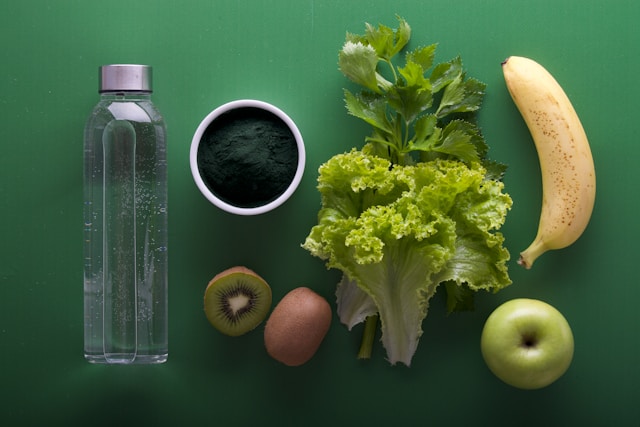
Nutrition and weight loss is one of the few corners of the wellness market that kept growing even through the pandemic years, while a lot of adjacent categories stalled out.
A big reason for that is how quickly the tools in this space have improved. Personalized nutrition assessments, AI coaching, smarter intervention design, these have all moved from nice to have features to the backbone of how digital nutrition products actually work. Companies in this space can now give people nutrition advice that's tailored to their body and habits, plus the kind of ongoing support that used to require a human coach checking in every week.
Below, we'll go through where the technology is heading and which AI approaches are actually making a difference in this industry.
Where is digital nutrition headed?
Whether a nutrition product succeeds usually comes down to a few numbers: how many people stick around, how long they stay, and how much value they get out of it over time. And that value is mostly a function of two things, how useful the product is and how easy it is to actually use.
Weaving AI and machine learning into assessment, recommendations, and intervention design is one of the more effective ways to move both of those numbers. A few approaches stand out.
1. Combining multiple ways of tracking health
This means blending digital tracking (wearables, phone apps) with more traditional methods (self reported logs, blood tests, medical records). Remote monitoring tools and connected devices have made this kind of blended tracking realistic in a way it wasn't a few years ago.
Veri, for instance, pairs continuous glucose monitoring with what users report about their diet to build a picture of someone's metabolic health. Lumen takes a different angle, using a handheld device to read CO2 levels and estimate metabolic flexibility, which it uses to guide people toward more natural weight loss.
2. Using AI and machine learning to make sense of health data
AI and ML make it possible to pull out insights that would otherwise stay buried, and to spot connections between someone's habits and their health outcomes that wouldn't be obvious from raw numbers alone.
This matters because messy, inconsistent data has long been a real problem in this space. Better models and algorithms are cutting down on errors and making the underlying systems more reliable.
January AI is a good example. It pulls in thousands of data points, glucose readings, activity levels, heart rate, and uses them to model a person's physiology and forecast glucose levels in real time. InsideTracker and DayTwo take a similar approach with their own data and modeling.
3. Connecting digital therapeutics with real world services
Digital therapeutics work better when they're plugged into services people can actually use day to day, healthy meal delivery being the obvious example (Foodsmart is one company doing this).
Between blended monitoring, smarter analytics, and this kind of real world integration, these three trends are shaping most of what's being built in digital nutrition right now.
The AI and ML tools reshaping nutrition and weight management
Assessment: hyper personalized analytics
A growing number of tools now lean on AI and ML for assessment and tracking progress. Here's where that shows up in practice.
1. Assessment devices: smart scales, CGMs, metabolite and breath analysis. January AI uses machine learning to predict glucose levels within two hours of a meal, pulling together manually logged food, heart rate data from a smartwatch, and CGM readings. Combining all three data sources makes its predictions about 31% more accurate than comparable single source models.
2. Self reported logs and digital diaries. Foodvisor uses self learning algorithms to identify what someone's eating and break down the nutrients and calories in each meal, which it then uses to keep people on track with ongoing coaching.
3. Computer vision for recognizing food and tracking intake. Some of the more capable tools in this space build on OpenAI's CLIP architecture, trained on 400 million image and text pairs, which can both generate images and describe what's in a photo. That same capability turns out to work well for analyzing meals from a photo, which makes tracking nutrition far less tedious for the person doing it.
4. Lab based and at home testing: biofluid analysis and microbiome testing. Companies like Vessel Health, Vivoo, DayTwo, and InsideTracker use precise biofluid tests and gut microbiome analysis to assess what's happening in someone's body in real time, predict how their blood sugar will respond to specific foods, and shape nutrition guidance around that.
5. Time series analysis for forecasting. A 2022 study led by Willem J. van den Brink used wearables and remote monitoring, continuous glucose sensors and a wristband, to detect when someone was eating and predict how activity, sleep, and diet affected their glucose levels over time. It's an early but meaningful step toward real time, personalized lifestyle recommendations built on continuous monitoring data.
Recommendations: building smarter nutrition plans
6. Correlation networks and rule based systems. InsideTracker's recommendation model combines a person's biochemistry, demographics, habits, and genetics with a rules layer to generate highly individual intervention suggestions.
7. AI generated meal plans. Algorithms can work through a wide range of inputs, body measurements, activity levels, eating patterns, hunger cues, sleep, habits, to calculate someone's calorie and nutrient needs. Most recommendation systems lean on content based filtering, collaborative filtering, or some hybrid of the two. DeepFM is one of the stronger algorithms in this category right now, blending factorization machines with deep learning inside a single neural network.
8. Real time plan adjustments. ML models can track someone's metabolism and biodata over time and tweak their plan on the fly to keep weight loss on track, constantly reading trends from monitoring data and self reports and adjusting the nutrient mix accordingly. One of the bigger advances here is combining batch training with online learning, so the model adapts as new data comes in rather than waiting for a full retrain. It's the same approach behind the recommendation engines on TikTok, Instagram, and YouTube Shorts. Some development teams have reported that pairing DeepFM with online learning lifted conversion rates by around 30%, order value by roughly 30%, and time spent engaging with the product by about 50%.
Interventions: can AI help people build better eating habits day to day?
AI can suggest specific meals, ingredients, and recipes based on someone's plan, what's already in their fridge, and what they tend to like. Similar logic can generate a full day's meal plan or a shopping list once you know someone's calorie targets, nutrient needs, food preferences, and household size.
- Optimization methods like mixed integer nonlinear programming work well here, since they can handle problems with both continuous and integer variables and nonlinear relationships.
- Genetic algorithms offer a more general purpose way to solve similar optimization problems.
A few practical examples of what this looks like in a real product:
- Building a shopping list straight from a meal plan
- Generating a meal plan based on what someone already has at home
- Creating a cart and placing an order automatically (Foodsmart does this)
- Swapping out or skipping meals someone doesn't want
Building nutrition and weight management solutions on AWS
At Upverse, we design and deploy AI driven nutrition and weight management solutions using AWS's reference architecture, drawing on our experience as an AWS Advanced Tier Services Partner and AWS Well Architected Partner. We help companies in this space build, deploy, and scale the kind of AI and ML applications that are reshaping the industry.
For a typical AWS build in this space, we usually recommend Amazon SageMaker for developing, training, and deploying models. SageMaker handles most of the heavy lifting in the machine learning pipeline, so teams can test different algorithms and frameworks without reinventing the infrastructure each time. It also automates model selection, which helps make sure the right model gets used for a given job, whether that's personalized diet recommendations or deeper health analytics.
Handling the volume of data these products generate takes the right data infrastructure too. We typically pair AWS Glue, a serverless tool for integrating data, with Amazon Redshift, a managed cloud data warehouse built for fast querying. Glue takes care of processing large datasets, while Redshift makes it possible to store and analyze that data efficiently enough to actually power AI driven features.
As an AWS Well Architected Partner, we build against the standards laid out in the AWS Well Architected Framework, which covers how to build applications that stay scalable, efficient, and secure as data volume grows. That discipline is what lets us deliver nutrition guidance and long term support that actually holds up at scale.
For teams that need to visualize data and support business decisions, we typically bring in Amazon QuickSight, a serverless analytics tool that scales easily and embeds into existing products. It lets teams build interactive dashboards, so stakeholders can see how their AI driven nutrition tools are actually performing and make decisions based on real data.
Combining AI and ML expertise with the flexibility of AWS gives nutrition and weight management companies a solid foundation to rework their digital offering and deliver a genuinely personalized experience to the people using it.



Not sure where AI fits in your business?
Most companies know AI matters. Very few know exactly where to apply it to see a real return. Take the free AI readiness assessment and get a scored report with clear next steps.